
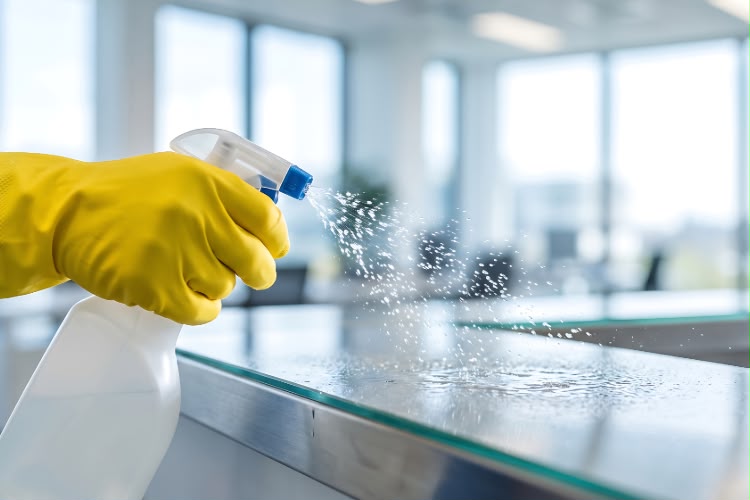
Cleaning, sanitizing, and disinfecting are terms often used when discussing workplace hygiene, but they do not mean the same thing. Understanding the differences can help businesses choose appropriate cleaning practices for their offices, retail spaces, clinics, and other commercial facilities.
For businesses in Toronto and the Greater Toronto Area (GTA), knowing when each process is needed can help maintain cleaner workspaces and support a healthier environment for employees, customers, and visitors.
What Is Cleaning?
Cleaning is the process of removing dirt, dust, debris, and other unwanted material from surfaces. It typically involves water, detergent, and physical action, such as wiping, scrubbing, or mopping.
Although cleaning removes many germs along with dirt, it does not necessarily kill them. However, it is an essential first step in maintaining a clean workplace and can reduce the number of germs present on surfaces.
Common examples of cleaning in a commercial setting include:
- Wiping desks, countertops, and workstations
- Vacuuming carpets and mopping floors
- Cleaning washrooms and kitchen areas
- Removing garbage and debris
- Cleaning reception areas and meeting rooms
Regular cleaning helps keep commercial spaces presentable and prevents dirt and grime from building up over time.
What Is Sanitizing?
Sanitizing reduces the number of germs on surfaces to a level considered acceptable under applicable public health standards or product instructions. The specific reduction required depends on the intended use and the relevant standard.
Sanitizing is often associated with food preparation areas, shared surfaces, and other spaces where reducing germs is important. It may involve an approved chemical product or another suitable method designed for the particular surface and use.
In a workplace, sanitizing may be appropriate for certain kitchen surfaces, shared tables, or other areas where the risk of contamination needs to be managed. The correct product and method depend on the surface, its intended use, and any applicable requirements.
Sanitizing does not necessarily eliminate all germs, so it should not be treated as interchangeable with disinfecting.
What Is Disinfecting?
Disinfecting uses a product or process designed to kill or inactivate specified microorganisms on surfaces. Disinfectants are selected according to the organisms they are intended to target and the surfaces on which they can safely be used.
Disinfecting may be important for frequently touched surfaces or areas where particular infection prevention requirements apply. Examples of high-touch surfaces in commercial facilities include:
- Door handles and push plates
- Light switches
- Shared desks and countertops
- Washroom fixtures
- Frequently touched shared equipment
For disinfectants to work as intended, users must follow the product label, including the required contact time. This is the amount of time the surface must remain visibly wet or otherwise meet the product’s stated conditions for the disinfectant to be effective.
Disinfecting is not always necessary for every surface during every cleaning visit. The appropriate approach depends on the type of facility, the surface, the level of risk, and applicable procedures.
Key Differences Between Cleaning, Sanitizing, and Disinfecting
Although these processes can be used together, each serves a different purpose.
- Cleaning: Removes dirt, debris, and many germs from surfaces.
- Sanitizing: Reduces germs to a level considered acceptable under the relevant standard or product instructions.
- Disinfecting: Kills or inactivates specified microorganisms when the product is used correctly.
In many situations, cleaning should take place before sanitizing or disinfecting because dirt and organic material can interfere with some products. Always follow the product label to determine the correct sequence and method.
Which Approach Does Your Business Need?
The right approach depends on the type of commercial space and how it is used.
Office Buildings
Offices generally need regular cleaning of workstations, floors, washrooms, kitchens, and shared areas. High-touch surfaces may require additional attention based on workplace policies and circumstances.
Retail Stores
Retail businesses benefit from consistent cleaning of sales floors, entrances, counters, washrooms, and employee areas. The appropriate sanitizing or disinfecting practices depend on the surfaces and activities taking place in the store.
Medical and Dental Offices
Healthcare settings may have specific infection prevention and control requirements. General commercial cleaning should not be assumed to replace required clinical cleaning, disinfection, instrument reprocessing, or other regulated procedures. Medical and dental practices should follow the applicable guidance and their own established protocols.
Health and Wellness Clinics
Physiotherapy, massage therapy, chiropractic, and other wellness facilities may have different requirements depending on the services offered. Cleaning plans should account for shared equipment, treatment areas, and any applicable hygiene or infection prevention procedures.
Why Professional Commercial Cleaning Matters
Understanding the difference between cleaning, sanitizing, and disinfecting helps businesses make informed decisions about maintaining their facilities. Using the right method for each task can help prevent damage to surfaces, avoid inappropriate chemical use, and support consistent workplace hygiene.
A commercial cleaning plan should reflect the facility’s layout, daily activities, cleaning frequency, and any industry-specific requirements. It should also clearly identify which tasks are included in routine service and which require specialized procedures.
Commercial Cleaning Services in Toronto and the GTA
Bora Cleaning provides commercial cleaning and recurring janitorial services for businesses across Toronto and the Greater Toronto Area. We work with offices, retail spaces, and other commercial facilities to develop cleaning plans tailored to their needs and preferred schedules.
If your business needs help maintaining a clean and professional workplace, contact Bora Cleaning to discuss your requirements and request a customized quote.